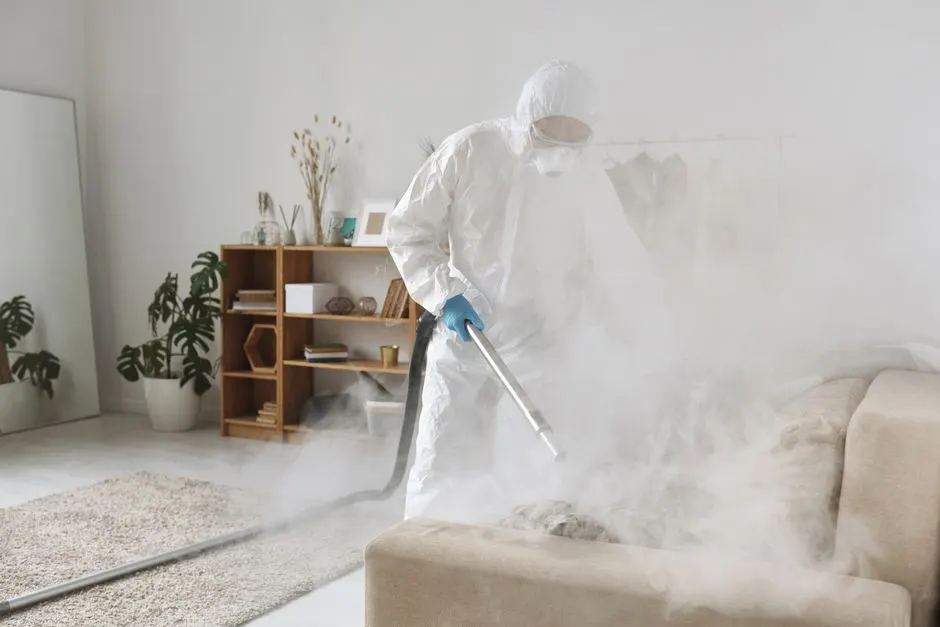
Smoke damage on furniture and upholstery is cleaned by removing dry soot first, then dissolving the oily residue with a mild alkaline cleaner, then deodorizing the padding and frame - in that order. Skip a step and you grind soot deeper into the fabric or lock the smell into the foam. In Capistrano Beach, where marine air keeps indoor humidity higher than most of inland Orange County, that residue stays tacky longer and odor lingers in cushions for months if it is not pulled out properly.
This guide walks through the exact process we use on couches, dining chairs, mattresses, and wood pieces after a kitchen fire, electrical fire, or wildfire smoke event. It covers what you can safely do yourself, what usually needs a pro, and the mistakes that turn a salvageable sofa into a curb item.
Why Smoke Residue Is Different on Furniture and Upholstery
Smoke residue on furniture in Capistrano Beach is not a single substance - it is a mix of dry soot particles, oily tar compounds, and acidic gases that settle at different rates depending on what burned. A protein fire from a kitchen flare-up leaves nearly invisible residue that smells like burnt meat and etches into finishes. A synthetic fire from foam, carpet, or electrical wiring leaves black sticky soot that smears the moment you touch it with a dry rag.
Upholstery makes this worse because fabric is porous. Smoke travels into the batting, the foam core, and the frame joints, not just the surface. That is why a couch can look clean after a wipe-down and still smell like a campfire three weeks later. The odor compounds are sitting in the padding, releasing slowly into the room.
Wood furniture behaves differently. Finished wood holds residue on the surface, but unfinished wood, cane, rattan, and the undersides of tables absorb it. We see this constantly in older Capistrano Beach homes near Fire Damage Restoration in Beach Road, where 1960s and 70s builds have a lot of original wood furniture with worn finish - the smoke soaks straight into the grain.
What You Need Before You Start
Gather everything before you touch a single cushion. Stopping mid-job to hunt for a brush means residue sits and sets.
- Nitrile gloves and an N95 or P100 respirator - soot particles are fine enough to reach deep lung tissue
- A HEPA vacuum (not a standard shop vac, which blows fine particles back into the air)
- Clean microfiber cloths - at least 8 to 10, because you swap them constantly
- Two buckets: one for cleaning solution, one for rinse water
- Mild dish soap or a dedicated upholstery cleaner with a neutral pH
- White vinegar, baking soda, and a spray bottle for deodorizing
- Rubber bands or zip ties to bag and isolate heavily soiled items
Work outside or in a garage with the door open if you can. Cleaning indoors without ventilation just redistributes the odor through the house. If the fire was recent and the home still has visible soot on walls and ceilings, handle the structure first - our team covers that under soot removal in CAPISTRANO BEACH, California before furniture ever gets addressed.
Step-by-Step: How to Clean Smoke Damage from Furniture and Upholstery
The order matters more than the products. Dry removal first, wet cleaning second, deodorizing last. Reverse that and you push soot into the fabric permanently.
Step 1: Vacuum the dry soot
Use the HEPA vacuum with a brush attachment. Work top to bottom, seam to seam, with light pressure. Do not scrub. The goal is to lift loose particles, not grind them in. Empty or change the filter bag when it starts looking gray - a loaded vacuum stops capturing fines and starts releasing them.
Step 2: Test your cleaner on a hidden spot
Pick the back of the couch, the underside of a cushion, or an inside seam. Apply a small amount of your cleaning solution, wait 60 seconds, and blot. If the color transfers to your cloth or the fabric pills, stop and switch to a gentler mix. Water-based cleaners can leave rings on some rayons and silks.
Step 3: Wipe down the frame and hard surfaces
Mix one teaspoon of mild dish soap per quart of warm water. Dampen a microfiber cloth - never soak it. Wipe in straight lines, folding the cloth to a clean side every few passes. Rinse with a second cloth dampened with plain water. Dry immediately with a third cloth.
Step 4: Clean the upholstery fabric
Work in small sections, roughly two feet square. Apply cleaner, let it sit for 30 to 60 seconds, then blot - do not rub. Rubbing drives residue into the weave. Change your rinse water every section; dirty water just redeposits what you already removed.
Step 5: Pull odor from the padding
Sprinkle baking soda generously over the cushions and let it sit for at least 12 hours, ideally 24. Vacuum it out with the HEPA unit. For deeper odor, mist the foam with a 50/50 white vinegar and water solution, let it dry fully in open air, then follow with baking soda. The vinegar smell fades as it dries - the smoke smell does not come back if you have removed the residue underneath.
Step 6: Air it out properly
Move pieces to a covered patio or garage with cross-ventilation for 2 to 3 days. Direct sun can fade fabric and warp wood, so shade matters. In Capistrano Beach, afternoon marine layer humidity slows drying - give cushions an extra day compared to inland areas.
How Do You Get Smoke Smell Out of Upholstery in Capistrano Beach, California?
You get smoke smell out of upholstery in Capistrano Beach by removing the residue source, not by masking it. Air fresheners, ozone sprays, and scented candles cover the smell for a day or two and then it returns because the tar compounds are still in the foam.
The reliable sequence is HEPA vacuum, alkaline wipe-down, baking soda dwell, vinegar mist, and full air-dry. If the smell persists after two full cycles, the odor has bonded to the foam core or the frame - and at that point surface cleaning cannot reach it. We handle those cases with hydroxyl generators and thermal fogging under fire odor removal CAPISTRANO BEACH California, which neutralizes odor molecules instead of covering them.
One more thing: wash or dry-clean every removable cover, throw pillow, and blanket that was in the room. Those hold odor longer than the couch itself and will recontaminate the furniture within days.
Can Smoke Damaged Upholstery Be Saved in Capistrano Beach, California?
Most smoke damaged upholstery in Capistrano Beach can be saved if it is treated within the first two to three weeks and the fire did not physically char the fabric. Light-to-moderate smoke exposure on a quality sofa is almost always recoverable. Heavy, prolonged exposure - especially from a slow-burning synthetic fire - is a different story.
Here is the honest breakdown we give homeowners:
- Usually salvageable: surface soot on fabric, mild odor, no visible charring, frame intact
- Sometimes salvageable: odor in the foam core, water damage from firefighting, light discoloration
- Usually not worth it: melted synthetic fabric, charred frame joints, structural sag, mold from wet padding left more than 48 hours
If the fire also involved water from suppression or a burst line, the furniture is dealing with two problems at once. That combination is what we address through fire and flood restoration in CAPISTRANO BEACH, California - smoke residue plus moisture creates mold fast in our coastal climate.
What Removes Smoke Residue from Wood Furniture in Capistrano Beach, California?
Smoke residue comes off wood furniture in Capistrano Beach with a mild soap solution for finished pieces and a 50/50 vinegar-water mix for unfinished or lightly finished wood. Never use ammonia or abrasive pads on finished wood - they dull the lacquer and leave a haze that is expensive to fix.
For finished wood: wipe with a damp cloth and a drop of dish soap, dry immediately, then apply a thin coat of furniture paste wax to seal the grain. For unfinished wood: wipe with the vinegar mix, let it dry, then sand lightly with 220-grit paper if staining remains, and seal with tung oil or polyurethane.
Pay attention to undersides, drawer interiors, and the backs of pieces. Smoke settles everywhere air reaches. We routinely find that the top of a dining table looks fine while the underside still smells like a fire pit. If the piece is an antique or has veneer, get it assessed before you touch it - veneer lifts easily when it gets wet.
Common Mistakes That Make Smoke Damage Worse
We see the same handful of errors on almost every job where a homeowner tried DIY first. Each one adds cost and reduces what can be saved.
- Wiping before vacuuming. This smears oily soot into the fabric and sets it. Always remove dry residue first.
- Using a standard shop vac. It blows fine soot particles back into the air and into your lungs. HEPA only.
- Over-wetting upholstery. Excess moisture reaches the foam and frame, where it feeds mold. Damp cloth, not wet.
- Using vinegar on stone or metal trim. Acid etches marble and pits brass. Keep it on fabric and unfinished wood.
- Masking odor with sprays. It buys you 48 hours and then the smell returns stronger.
- Waiting weeks to act. Residue sets harder and odor bonds deeper with every passing day.
If you have already made one of these mistakes, it is not necessarily a loss - but the cleaning gets more involved. Call before you try a second round of DIY.
When to Call a Professional
Call a professional when the smoke smell survives two full cleaning cycles, when the fire was large enough to leave visible soot on walls and ceilings, or when the furniture is high-value, antique, or upholstered in a fabric you cannot identify. Those are the cases where DIY risks permanent damage.
Our team handles the full scope: extraction, HEPA vacuuming, chemical sponge work, hydroxyl or thermal fogging, and ozone treatment where appropriate. We also assess whether the piece is worth restoring versus replacing, and we tell you straight - no upsell on a sofa that is not coming back.
If you are not sure whether your situation needs a pro, the answer usually becomes obvious once you know the fire type and how long the residue has been sitting. For a full picture of what restoration involves, see our fire-damaged furniture restoration in CAPISTRANO BEACH, California service page. And if you are comparing options across the area, our overview of Fire Damage Restoration covers the full process from first call to final walkthrough.
Frequently Asked Questions
How do you get smoke smell out of upholstery in Capistrano Beach, California?
Vacuum with a HEPA unit, wipe with a mild alkaline cleaner, apply baking soda for 12 to 24 hours, mist with 50/50 vinegar and water, then air-dry for 2 to 3 days. If odor remains after two cycles, the foam core is contaminated and needs professional hydroxyl or thermal fogging treatment.
Can smoke damaged furniture be restored in Capistrano Beach?
Yes, most furniture with light-to-moderate smoke exposure can be restored if treated within 2 to 3 weeks. Pieces with charred frames, melted synthetic fabric, or mold from wet padding are usually not worth restoring. A professional assessment takes about 30 minutes and tells you which category you are in.
What removes smoke residue from wood furniture in Capistrano Beach, California?
For finished wood, use a mild dish soap solution - one teaspoon per quart of warm water - wiped with a damp microfiber cloth and dried immediately. For unfinished wood, use a 50/50 white vinegar and water mix, then seal with paste wax or tung oil. Avoid ammonia and abrasive pads entirely.
Is professional upholstery cleaning needed after smoke damage in Capistrano Beach?
Professional cleaning is needed when odor persists after two DIY cycles, when the fire was large, or when the furniture is high-value or antique. Pros use HEPA extraction, hydroxyl generators, and thermal fogging that reach the foam core where household methods cannot. Typical 2026 pricing in this area runs $150 to $450 per piece depending on size and contamination level.
How long does smoke damage restoration take for furniture in Capistrano Beach?
Light smoke damage on a few pieces takes 1 to 2 days. A full room of furniture with deep odor contamination takes 3 to 5 days, including drying time. Coastal humidity in Capistrano Beach adds roughly 24 hours to drying compared to inland Orange County locations.
Get Help with Fire Damage Restoration in Capistrano Beach
If your furniture still smells like smoke after cleaning, or the fire was big enough to leave residue on the walls, call us. We assess the damage, tell you what can be saved, and handle the restoration from start to finish.
Call Fire Damage Restoration Capistrano Beach at (833) 929-6186 for a same-day assessment.