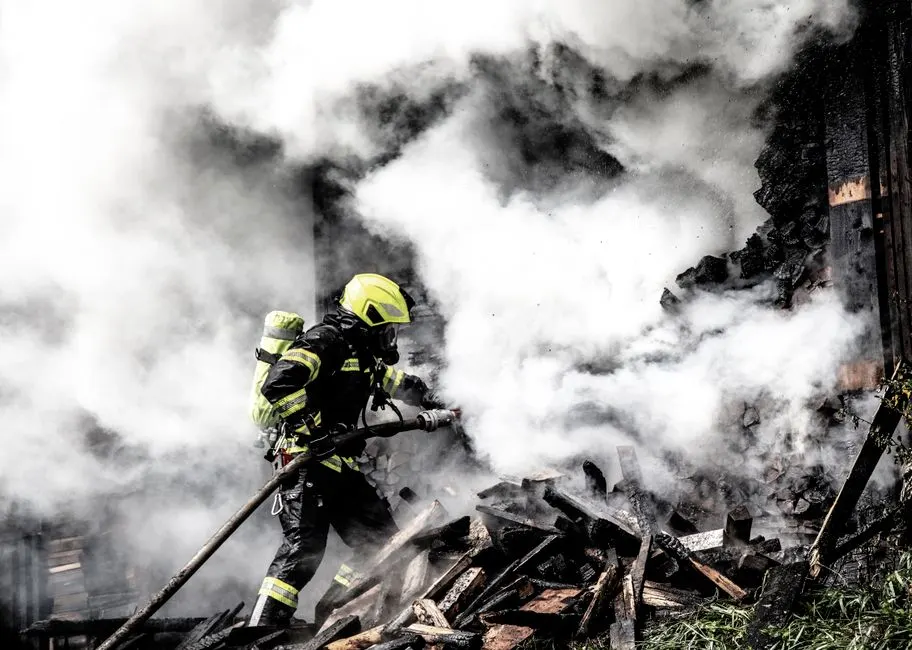
Attic fires are harder to put out because the fire burns inside a sealed, superheated box with no windows, no easy access, and a constant supply of moving air from soffit and ridge vents. By the time flames break through the roof deck, the fire has usually been burning for 15 to 30 minutes already. That is why attic fire restoration is a different job than cleaning up a kitchen or bedroom fire, and why we treat every attic call in Capistrano Beach as a structural emergency, not a cosmetic one.
Below we break down what makes attic fires so stubborn, what causes them here on the coast, how the restoration process actually runs, and what 2026 pricing looks like in this area.
Why attic fires are harder to put out than room fires
An attic is a chimney with a roof on it. Heat rises into a low, unoccupied cavity lined with dry wood framing, paper-faced insulation, and old wiring - three materials that ignite fast and hold heat. Firefighters cannot simply open a window and hit the seat of the fire. They cut a ventilation hole in the roof deck, which feeds oxygen to the flames before it cools them. That is the tradeoff that makes attic fires so hard to control.
Three physical facts drive the difficulty:
- No line of sight. Attic fires hide behind knee walls, under insulation batts, and inside rafter bays. Crews often fight a fire they cannot see until they pull ceiling drywall from below.
- Ventilation feeds the fire. Soffit vents, ridge vents, gable vents, and attic fans all push air across the fire. A 1,200 CFM attic fan can move enough oxygen to double flame spread in minutes.
- Heat has nowhere to go. Attic temperatures during a fire routinely hit 1,100°F to 1,500°F. That is hot enough to char rafters, melt asphalt shingles from underneath, and warp metal roof flashing.
That combination is why a fire that starts small in an attic is often a two-alarm fire by the time a neighbor sees smoke. If you are searching for fire damage restoration near me in CAPISTRANO BEACH, California, the honest answer is that the fire part is the fire department's job - the restoration part is ours, and it starts the same night.
What causes attic fires in Capistrano Beach, California
The leading attic fire causes in Capistrano Beach, California are electrical faults, overheated exhaust fans, and lightning strikes on older roof assemblies - and our housing stock makes all three worse than the national average. Most of the homes between Beach Road and Camino Capistrano were built between 1955 and 1985, which means original knob-and-tube or early Romex wiring, undersized attic circuits, and insulation that has been topped up two or three times without anyone checking what it was buried over.
The specific triggers we see most often:
- Recessed can lights buried in insulation. A non-IC-rated can light needs 3 inches of clearance. When a homeowner blows in R-38 insulation to cut cooling costs, that clearance disappears and the fixture runs 200°F to 250°F against paper backing.
- Bathroom and dryer exhaust fans venting into the attic. Lint and dust pack the fan housing, the motor seizes, and the heat has nowhere to go. This is the single most common attic fire cause we document in this zip code.
- Rodent-chewed wiring. Coastal Capistrano Beach has year-round rat pressure. Chewed insulation on a 15-amp attic circuit arcs at the first load spike.
- Lightning. San Juan Capistrano and the coastal ridge see summer monsoon strikes. A strike on a 1970s roof with no lightning protection can ignite the sheathing from the top down.
- Chimney and flue failures. Cracked flue tile lets 900°F creosote embers into the attic framing around the chase.
If you want to know how to prevent attic fires in Capistrano Beach California, start with a $250 to $450 electrician inspection of every attic circuit and every exhaust fan termination. That one visit catches about 80% of what we see after the fact.
Why attic fires spread fast in Capistrano Beach
Attic fires spread fast in Capistrano Beach because the same ocean breeze that makes this town pleasant to live in also feeds the fire. A typical afternoon on the 92624 side of the 5 sees 8 to 14 mph onshore wind. That airflow enters soffit vents on the windward side and exits the ridge on the leeward side, which turns the entire attic into a horizontal draft path.
Once flames reach the underside of the roof sheathing, they run laterally along the OSB or plywood in a matter of 3 to 6 minutes. From there, three things happen at once:
- Shingles delaminate and expose the deck to direct flame.
- Rafter tails char and lose load capacity, which is a structural problem, not a cosmetic one.
- Smoke pushes down through ceiling penetrations - can lights, bath fans, attic hatches - and deposits soot on every surface below.
That last point matters more than most homeowners expect. Even when the fire never leaves the attic, the smoke does. We routinely handle smoke damage restoration in CAPISTRANO BEACH, California in living rooms and bedrooms of homes where the flames never crossed the ceiling line. The smell does.
The attic fire restoration process in Capistrano Beach
The attic fire restoration process in Capistrano Beach runs in a fixed order: board-up and tarp, structural assessment, debris and soot removal, odor treatment, structural repair, and final rebuild. Skipping or reordering those steps is how a house ends up smelling like smoke 18 months later.
Step 1: Emergency board-up and roof tarp (same day)
Firefighting leaves a 4x4 to 8x8 foot ventilation hole in the roof deck and often broken windows from the hose line. We tarp the roof and board the openings the same day to stop rain intrusion. On the coast, that matters - a single overnight rain event on an open attic can turn a fire claim into a fire-and-water claim.
Step 2: Structural assessment and moisture mapping
We map char depth on every rafter, check the ridge beam and ceiling joists for deflection, and thermal-scan the ceiling below for hidden heat pockets. Anything charred more than 1/8 inch deep on a load-bearing member gets sistered or replaced, not sanded and painted.
Step 3: Debris removal and soot cleanup
Wet insulation, charred framing, and melted vapor barrier all come out. Then we dry-sponge and HEPA-vacuum every rafter bay. Soot from an attic fire is oily and acidic - left in place, it etches metal ductwork and stains drywall within weeks. That is why we bring in soot removal in CAPISTRANO BEACH, California as a dedicated phase rather than a quick wipe-down.
Step 4: Odor neutralization
Hydroxyl generators and thermal fogging run for 24 to 72 hours depending on how far smoke traveled. Ozone is used only in unoccupied spaces and only after all porous debris is out. If the smoke reached the living area, we also treat ductwork and soft goods.
Step 5: Structural repair and rebuild
New rafters, sheathing, felt, and shingles go back to current California Building Code. If the fire compromised a load path, we coordinate with a licensed structural contractor. Most attic rebuilds we run in this area take 3 to 6 weeks from tarp to final inspection.
Attic fire restoration cost in Capistrano Beach, California
Typical 2026 attic fire restoration cost in Capistrano Beach, California runs $18,000 to $65,000 for a single-family home, with most jobs landing between $28,000 and $42,000. The wide range comes down to how far the fire traveled and how much of the ceiling below has to come out.
Realistic 2026 line items in this market:
- Emergency tarp and board-up: $900 to $2,400
- Debris removal and disposal: $2,500 to $6,000
- Soot and smoke cleanup, whole house: $4,000 to $12,000
- Odor treatment (hydroxyl + fogging): $1,200 to $3,500
- Structural framing and roof rebuild: $9,000 to $35,000
- Interior drywall, paint, insulation: $3,500 to $14,000
Insurance almost always covers the fire portion. What it does not always cover is the code-upgrade piece - bringing 1960s framing, wiring, and insulation up to current code while the wall is open. We document that separation clearly so your adjuster can approve it before we start, not after.
Common mistakes homeowners make after an attic fire
The most expensive mistake after an attic fire is waiting to call anyone because the visible damage looks small. Attic fires are deceptive - the char you can see from the hatch is usually 20% of the damage.
What we see go wrong:
- Running the HVAC. If the system was on during the fire, the blower pulled smoke into every duct and every room. Running it again redistributes soot across clean surfaces.
- Throwing out smoke-damaged items too early. Most furniture, clothing, and electronics can be saved. Once it is in the dumpster, it is gone from the claim.
- Painting over soot. Soot bleeds through latex paint in 60 to 90 days. It has to be sealed with a shellac-based primer first.
- Ignoring the ceiling below. Smoke travels down through every can light and fan box. If the ceiling is not cleaned, the smell comes back with the first hot day.
- Hiring a general handyman for a fire job. Fire restoration requires documentation, moisture readings, and air quality verification that a handyman cannot produce for your adjuster.
If your fire was electrical in origin, the cleanup scope is different - the wiring itself is evidence and hazard. We handle electrical fire cleanup in CAPISTRANO BEACH, California with a licensed electrician on the same job so the circuit is made safe before anyone goes back into the attic.
When to call a professional
Call a professional the same day if any of these are true: you can smell smoke anywhere in the house, the fire department cut a hole in your roof, your attic insulation is wet or charred, or your ceiling has any sag or discoloration. Those are not DIY conditions - they are structural and health conditions.
Fire Damage Restoration Capistrano Beach handles attic fire restoration from the first tarp to the final walkthrough. We work directly with your insurance adjuster, we document every step with photos and moisture readings, and we do not close a job until the smell test passes in every room. If you are in Doheny Village, Palizada, or anywhere along the coast, we are already in the neighborhood.
Frequently Asked Questions
Why are attic fires harder to put out in Capistrano Beach, California?
Because coastal airflow through soffit and ridge vents feeds the fire continuously, and the tight attic cavity traps 1,100°F to 1,500°F heat with no windows for access. Crews have to cut the roof to reach the seat of the fire, which adds oxygen before it cools the flames.
How long does attic fire restoration take in Capistrano Beach?
Most attic fire restoration jobs in Capistrano Beach take 4 to 10 weeks from tarp to final inspection. Small, contained fires with minimal smoke travel finish in 3 to 4 weeks. Fires that pushed smoke into the living area or compromised rafters run 8 to 12 weeks.
What causes attic fires in Capistrano Beach, California?
The top causes are exhaust fans venting into the attic, recessed lights buried under added insulation, rodent-chewed wiring, and lightning strikes on older roof assemblies. Homes built between 1955 and 1985 in this area carry the highest risk because of original wiring and repeated insulation top-ups.
Can an attic be restored after a fire in Capistrano Beach?
Yes. Nearly every attic we see can be fully restored rather than demolished. Charred rafters get sistered or replaced, sheathing and shingles go back to current code, and the space is re-insulated and re-vented. Total loss attics are rare and usually involve a collapsed ridge beam.
Does homeowners insurance cover attic fire restoration in Capistrano Beach?
Yes, standard California homeowners policies cover fire damage including tarping, debris removal, soot cleanup, odor treatment, and rebuild. Code-upgrade costs while walls are open are sometimes excluded, so we document that line separately for your adjuster before work begins.
Get help with Fire Damage Restoration in CAPISTRANO BEACH
If your attic caught fire, the clock on smoke and moisture damage started the moment the flames went out. We tarp, clean, and rebuild - and we deal with your insurance company so you do not have to.
Call Fire Damage Restoration Capistrano Beach at (833) 929-6186 and we will be on-site the same day.